
Pulmonary fibrosis is a progressive and often fatal lung disease characterized by aberrant wound healing, persistent activation of profibrotic pathways, and excessive extracellular matrix deposition, resulting in irreversible scarring of the lung parenchyma and progressive decline in respiratory function.
All services
Pulmonary fibrosis
AlveolAir™ is a relevant model to evaluate antifibrotic compound efficacy
Assay description
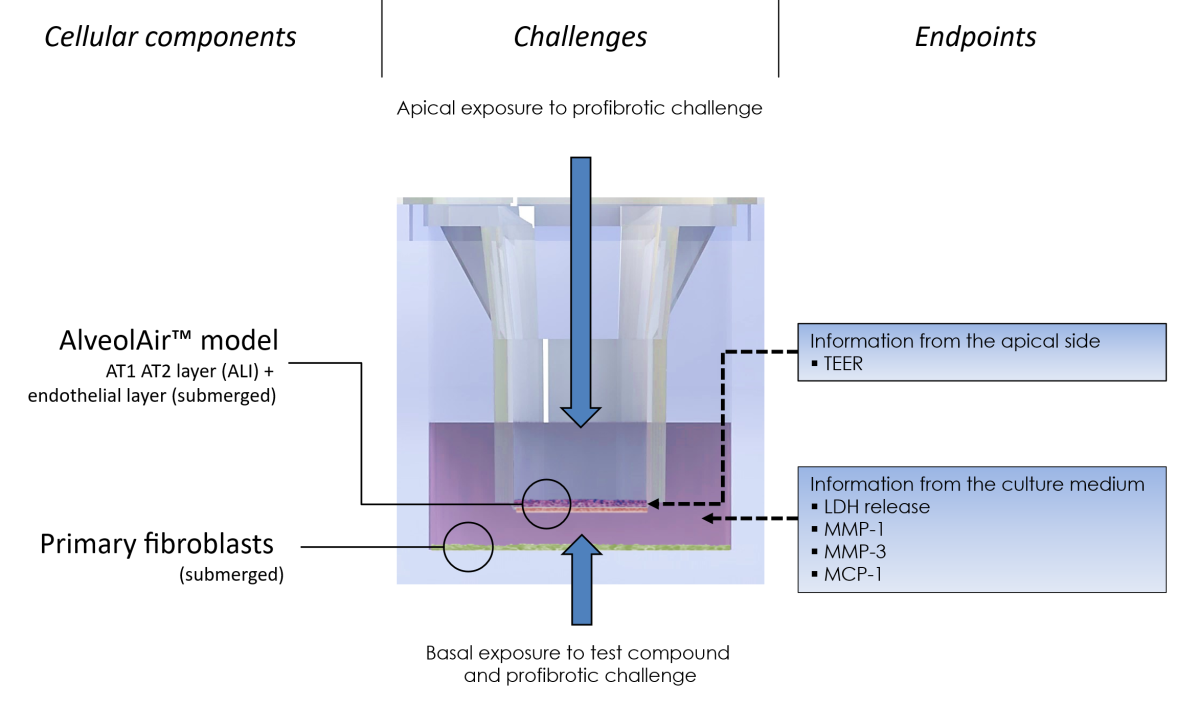
Our IPF assay aims to recapitulate in vitro key events of pulmonary fibrosis to screen novel compounds and better understand their underlying mechanism. It allows to evaluate the efficacy of candidate compounds to prevent or reduce a fibrotic state.
Transforming growth factor-beta (TGF-β), plays a central role in the development of pulmonary fibrosis by promoting fibroblast activation, myofibroblast differentiation, and extracellular matrix production. Tumor necrosis factor-alpha (TNF-α) is a pro-inflammatory cytokine that can also contribute to pulmonary fibrotic processes through its role in inflammation and tissue remodelling.
A TGF-β + TNF-α cocktail is therefore used to induce a fibrotic state in a human-relevant in vitro alveolar tissue model (AlveolAir™) co-cultured with primary human fibroblasts.
Targeting these pathways represents an important therapeutic strategy for the development of antifibrotic treatments.
Key readouts
• Primary efficacy readouts quantification of fibrosis-associated markers, MMP-1 and MMP-3 and MCP-1
• Local tolerance readouts to evaluate tissue viability following compound exposure (TEER / LDH)
Testing strategy
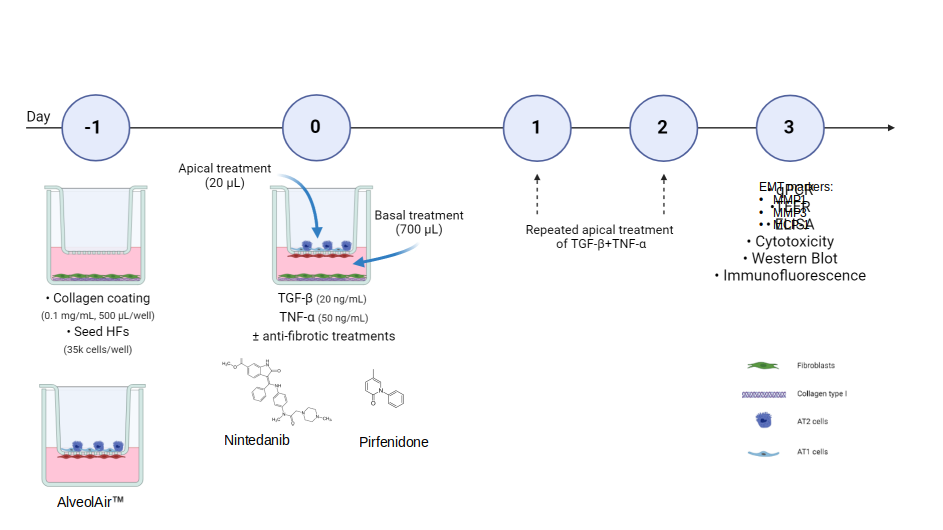
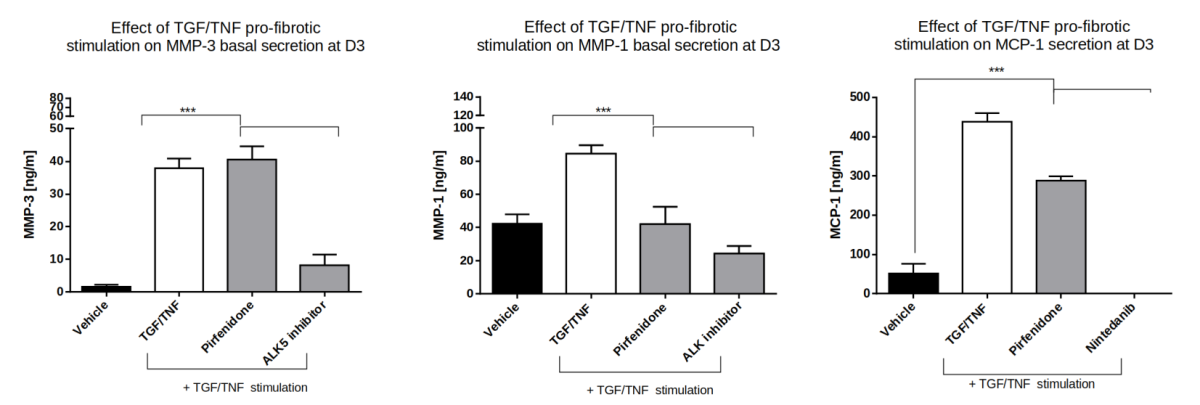
A 3-day treatment induces a significant profibrotic response enabling the evaluation and comparison of test compounds based on their ability to modulate profibrotic responses against historical reference compounds (Ninetedanib, Pirfenidone, Nerandomilast...)
Example of response for different fibrotic marker with antifibrotic reference drugs
The assay can be further extended to additional profibrotic inducers, such as bleomycin, and end-points such as gene expression, to broaden the characterization of fibrotic responses and evaluate antifibrotic compound efficacy across complementary induction pathways.
Interested in this service ?